



Popular Articles
Ultimate Guide to 360° Comprehensive Interior Detailing — Deep Clean, Sanitize and Protect Your Car’s Cabin
2026.02.04
Singapore Car Window Tinting Guide: Rules, Benefits, and How to Choose the Right Film
2026.02.04
The Complete Guide to Colour Wraps — Transforming Your Car’s Look with Style and Protection
2026.02.04

About Company
Colorfuul is a global leader in high-end automotive films, offering Color TPU PPF, Transparent PPF, PET Window Films, and Vinyl Wrapping. With exports to over 100 countries, we deliver consistent quality, competitive pricing, and professional service. Beyond production, we provide OEM/ODM customization, shaping the future of automotive aesthetics.
 mary@colorfuul.com
  86 13541196952
 Understanding Car Window Tint Laws in the U.S
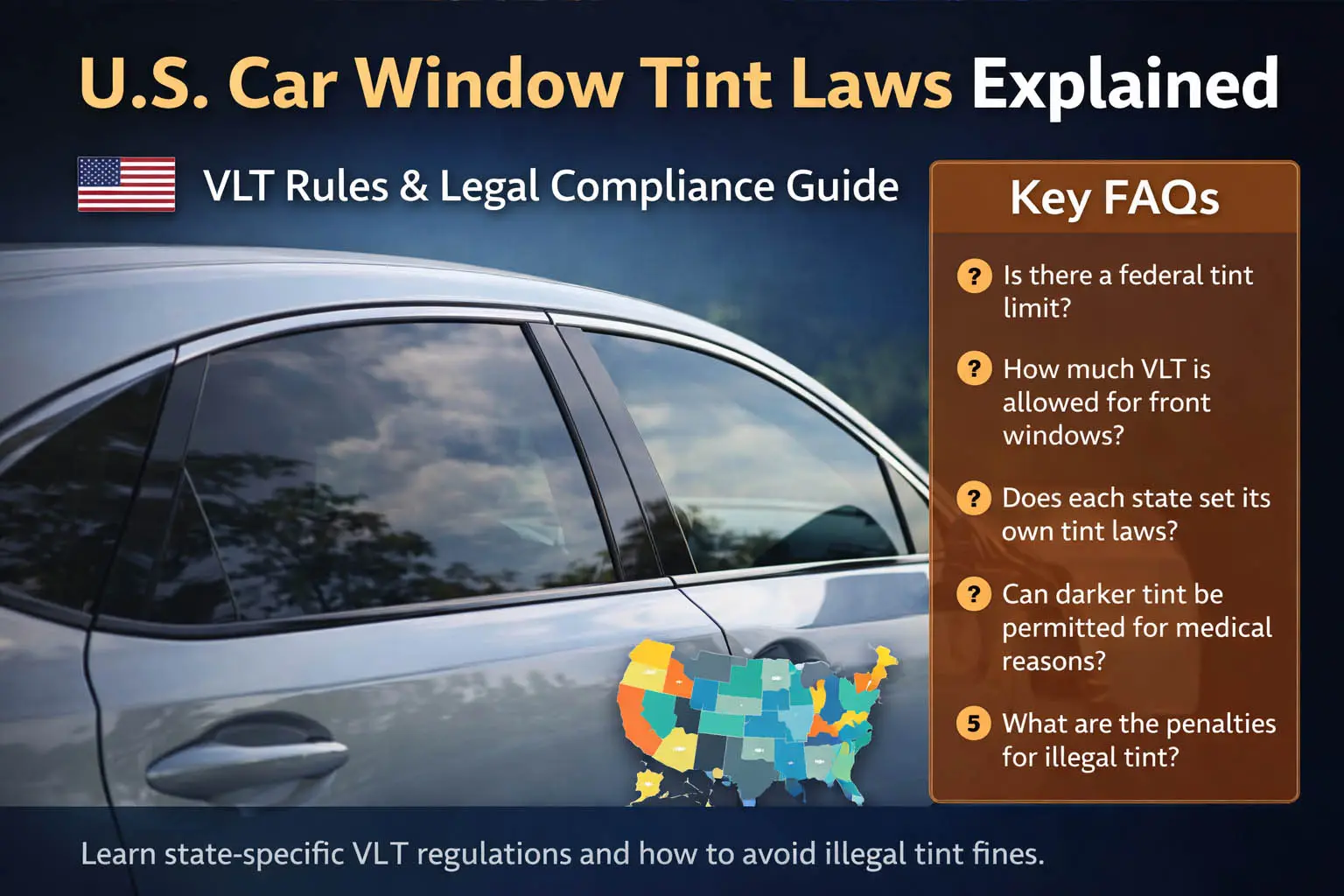
Car window tinting offers benefits such as heat reduction, UV protection, glare control, and enhanced privacy. However, window tint laws in the United States vary by state, and failing to comply with legal limits can result in fines or inspection failure. This guide explains VLT regulations, state differences, and how to stay compliant when choosing automotive window tint.
What Is VLT and Why It Matters
Visible Light Transmission (VLT) refers to the percentage of visible light that passes through a vehicle’s window and tint film combined.
-
Higher VLT = lighter tint
-
Lower VLT = darker tint
U.S. window tint laws are primarily based on minimum VLT percentages, which ensure driver visibility and road safety.
U.S. Window Tint Laws: Federal vs State Regulations
There is no single federal VLT standard for all vehicles. Instead:
-
Federal law regulates manufacturing standards
-
Each state sets its own window tint limits
This means a tint legal in one state may be illegal in another.
Typical Window Tint Limits by Vehicle Area
While exact limits vary by state, most laws regulate tint by window position:
-
Windshield
Usually only allowed above the AS-1 line or with high VLT (often ≥70%) -
Front Side Windows
Commonly 35%–50% VLT minimum -
Rear Side Windows
More flexible; some states allow darker tint -
Rear Window
Often unrestricted if the vehicle has side mirrors
Medical Exemptions for Window Tint
Many U.S. states allow medical exemptions for darker window tint if the driver has a qualifying condition, such as:
-
Light sensitivity
-
Skin disorders
-
Autoimmune conditions
Documentation from a licensed physician is typically required and must be kept in the vehicle.
Consequences of Illegal Window Tint
Driving with non-compliant tint may result in:
-
Traffic citations
-
Fines or fix-it tickets
-
Mandatory tint removal
-
Failed vehicle inspections (where applicable)
Penalties vary by state and enforcement intensity.
How to Ensure Your Window Tint Is Legal
To stay compliant with U.S. window tint laws:
-
Check state-specific VLT limits before installation
-
Use a certified professional installer
-
Choose film with manufacturer VLT documentation
-
Avoid stacking films that lower final VLT
-
Keep tint certification or exemption paperwork in the vehicle
Choosing Legal Window Tint Film
Modern window films allow strong heat and UV rejection without dark appearance. Technologies such as:
-
Ceramic window film
-
Titanium nitride film
can provide high performance while remaining within legal VLT limits.
Final Thoughts
Understanding and following car window tint laws in the U.S. helps you enjoy the benefits of tinting without legal risk. Because regulations vary widely by state, always verify local requirements before installation. Choosing compliant, high-quality window film ensures comfort, safety, and peace of mind.


