



Popular Articles
Ultimate Guide to 360° Comprehensive Interior Detailing — Deep Clean, Sanitize and Protect Your Car’s Cabin
2026.02.04
Singapore Car Window Tinting Guide: Rules, Benefits, and How to Choose the Right Film
2026.02.04
The Complete Guide to Colour Wraps — Transforming Your Car’s Look with Style and Protection
2026.02.04

About Company
Colorfuul is a global leader in high-end automotive films, offering Color TPU PPF, Transparent PPF, PET Window Films, and Vinyl Wrapping. With exports to over 100 countries, we deliver consistent quality, competitive pricing, and professional service. Beyond production, we provide OEM/ODM customization, shaping the future of automotive aesthetics.
 mary@colorfuul.com
  86 13541196952
 Midnight Purple in Car Culture & JDM: Origins & Cultural Impact
Midnight Purple is such an iconic color in car culture and the JDM scene because it represents the peak of 1990s Japanese technological ambition, serving as a visual bridge between the "stealth" of street racing and the high-end prestige of factory-built performance legends. You will find that this color is far more than a simple pigment; it is a cultural artifact that signals a deep understanding of automotive heritage, particularly within the Japanese Domestic Market (JDM) community, where color identity is often as vital as mechanical specification.
What Is Midnight Purple and Why Does It Matter in Car Culture?
Midnight Purple matters in car culture because it is a rare example of a factory-applied color that achieved the status of a custom, high-end "hero" shade usually reserved for expensive boutique paints. It is a deep, near-black violet that utilizes metallic or pearlescent layers to react to light, moving through a spectrum of indigo, plum, and charcoal depending on the environment.
In midnight purple car culture, colors gain meaning through their association with specific movements and engineering feats. You see colors like "Ferrari Red" or "British Racing Green" defining national identities, but Midnight Purple is unique because it defines a subculture of high-performance tuning. It matters because it represents a time when Japanese manufacturers stopped imitating Western design and created a visual language that was entirely their own. It is a shade that demands you take a second look, rewarding your attention with hidden depth that mirrors the "hidden" potential of a tuned Japanese engine.
How Did Midnight Purple Become Associated With the JDM Scene?
Midnight Purple became tied to the JDM scene through its debut as a flagship color during the golden age of Japanese sports car production, specifically catering to the distinct aesthetic preferences of the domestic Tokyo and Osaka street scenes. During this era, japanese car culture was moving away from the bright, primary colors of the 1980s toward moodier, more sophisticated tones that felt premium yet aggressive.
You notice that midnight purple jdm builds often prioritize a specific "midnight" aesthetic—meant to look subtle under city streetlights while glowing vibrantly during a late-night highway run. This color fit the persona of the cars of the time: understated at first glance but capable of extreme performance. It became the unofficial uniform for the high-end Japanese tuner, representing a level of "cool" that was less about being loud and more about being deep and mysterious. This association has only grown stronger as that specific era of JDM cars has reached legendary status worldwide.
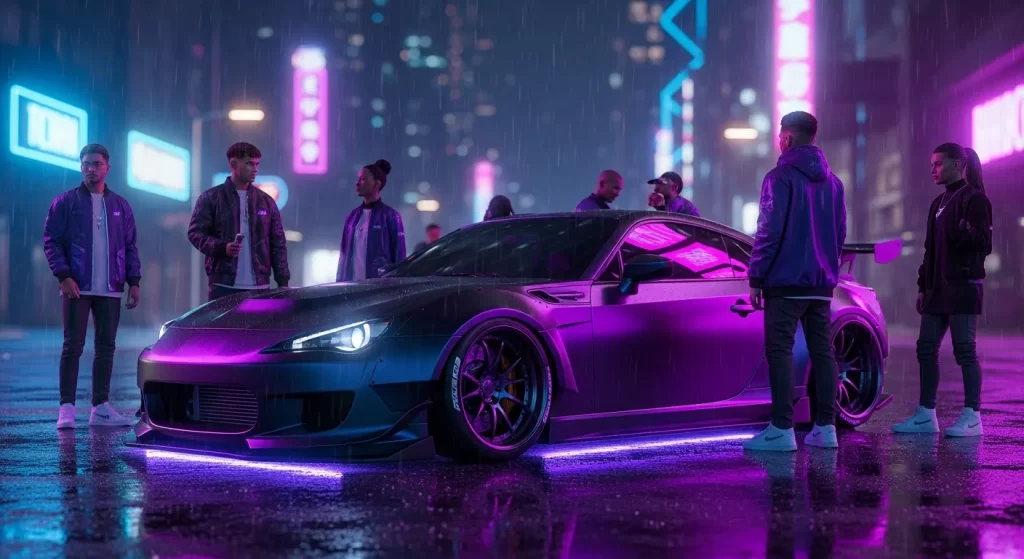
Why Did the Nissan GT-R Make Midnight Purple Iconic?
The GT-R cemented Midnight Purple’s legacy by utilizing the color to launch its most exclusive, high-performance variants, making the shade a visual shorthand for the absolute peak of the Nissan Skyline lineage. You see this most clearly with the R33 and R34 generations, where the color was used to designate limited-production models that were often the most sought-after by enthusiasts and collectors.
Within nissan gtr culture, the color is inseparable from the car's identity as "Godzilla." By reserving Midnight Purple for these special runs, Nissan created a perception of prestige that standard colors like white or silver simply could not match. You get a sense of history every time you see a midnight purple gtr; it is a visual signal that you are looking at a vehicle with a direct line to Japanese racing royalty. This pairing was so successful that it influenced decades of automotive design, proving that a "hero color" could be just as memorable as a high-performance engine.
What Visual Qualities Made Midnight Purple Stand Out in the 1990s?
Midnight Purple looked different from typical 1990s colors because it abandoned the flat, solid paint structures of the era in favor of a multidimensional, reactive finish that could "hide" its true identity in low light. While most rare car colors 1990s relied on being bright or neon to get noticed, Midnight Purple relied on depth and mystery.
Key visual traits that defined the era:
- The Stealth Factor: In the shade, your car looks like a standard neutral black, allowing it to blend into urban environments.
- The "Pop" Effect: Direct light activates the violet pigments, creating a sudden, vibrant contrast that highlights body lines.
- Metallic Depth: Unlike standard metallic paints, it uses finer grain flakes to create a "liquid" rather than "glittery" look.
- Complex Gradients: On a single panel, you can see dark indigo, deep plum, and metallic purple all at once.
You notice that it was culturally disruptive because it challenged the idea that a sports car had to be "loud" to be special. It introduced a level of visual sophistication to the JDM market that was previously reserved for European luxury brands.
How Did Midnight Purple Expand Beyond the GT-R and Japan?
Midnight Purple spread beyond Japan as global tuning culture embraced the JDM aesthetic, leading enthusiasts in the US, Europe, and Australia to adopt the shade through custom resprays and vinyl wraps. You see this global expansion as part of the "import" movement, where the aesthetic of Japanese street racing became a global design standard.
In the midnight purple global car culture, the color acts as a badge of authenticity. Even if a car is not a Nissan, applying this specific violet shade is a respectful nod to the history of the scene. You find that the color has entered the digital space as well, appearing as a "fan favorite" in video games and media, which further pushed the color into the hands of a new generation of enthusiasts who may have never seen an original Midnight Purple car in person. It has become a global language of performance and style.
How Midnight Purple Became a Status Symbol in Car Culture
Midnight Purple represents status and individuality because its reactive nature suggests a level of customization and attention to detail that standard factory paints lack. Within the community, choosing this color is seen as a high-intent decision—it signals that you value the "story" of the car as much as its horsepower.
The jdm status color works through a perception of "knowing." You notice that those who recognize Midnight Purple are usually deep-level enthusiasts. This creates an "if you know, you know" atmosphere around the color. In midnight purple symbolism, the shade is tied to the elite "midnight" racing clubs of Japan, carrying a sense of mystery and exclusivity. It isn't just a status symbol because of how it looks; it is a status symbol because of the heritage it represents. It tells the world that you appreciate the golden era of automotive engineering and that your car is part of that lineage.
How Modern Builds Use Midnight Purple Today
Midnight Purple remains popular in modern builds through high-tech reinterpretations, including advanced multi-stage paint jobs and hyper-realistic vinyl wraps that mimic the "flip" of the original Nissan codes. You find that modern builders are no longer limited to the original factory formulas; they are pushing the color into new territories with satin finishes and carbon-fiber infusions.
Common ways the color appears in modern culture:
- Digital Prints: Wraps that can replicate the exact metallic grain of the R34 Midnight Purple 2.
- Cross-Brand Customization: European and American cars using the shade to create a "Euro-JDM" fusion.
- Accent Details: Using the color on wheels, brake calipers, or engine covers to add a subtle hint of JDM heritage.
- Satin Variations: Muted versions of the color that emphasize the silhouette of the car over the metallic "pop."
You see that midnight purple modern builds are a testament to the color's versatility. It doesn't look dated on a modern chassis; in fact, its dark, complex nature often makes new cars look more contoured and aggressive.
Why Midnight Purple Still Resonates With Enthusiasts
Enthusiasts still connect with Midnight Purple because it evokes a deep sense of nostalgia for a period of automotive history that many consider to be the peak of driver-focused design. You find that the midnight purple legacy is tied to the emotional connection people have with the cars of their youth—whether seen on the street or in a game.
It resonates because it is "undefeated." Unlike many experimental colors that look "tacky" ten years later, Midnight Purple has only become more respected with age. You notice that it carries an emotional weight; it represents the mysterious, high-octane atmosphere of a time when the JDM scene was at its most innovative. It provides you with a sense of continuity. Every time you see that violet glow, it bridges the gap between the past and the present, reminding you why you fell in love with car culture in the first place.
Is Midnight Purple More Than Just a Color in JDM Culture?
Midnight Purple represents more than paint; it is an act of storytelling that anchors the vehicle's identity in the lore of Japanese performance and the spirit of late-night racing. You should view the midnight purple cultural meaning as a form of non-verbal communication within the community. It is a way for you to signal your values without saying a word.
Ultimately, the color is a pillar of identity. It tells a story of technological pride, street-level mystery, and a refusal to be ordinary. In the JDM scene, where every modification is a choice about who you are as a driver, choosing Midnight Purple is a choice to be part of a legend. It is more than a color because it holds the collective memories of an entire subculture. It is the visual heartbeat of the scene, remaining as vibrant and relevant today as it was thirty years ago.
Why Is Midnight Purple So Closely Linked With GT-R Models?
GT-R models made Midnight Purple iconic by proving that a factory car could possess the soul of a custom build through its visual identity alone. You will find that Midnight Purple GTR models are treated as the "standard-bearers" for the color, representing the peak of Nissan's cultural influence. This link is so strong that the color has become a primary identifier for the model's prestige.
How Does Nissan Z Heritage Connect to Midnight Purple Culture?
Nissan Z heritage reflects similar cultural values by prioritizing a balance between classic design and modern performance, often utilizing the same "hero color" philosophy. On the Nissan Z Heritage editions, you see a direct continuation of the "Midnight" identity, bridging the gap between the GT-R's racing dominance and the Z's stylish, driver-focused legacy in the world of Nissan.
Why Does Midnight Purple Look So Striking on BMW F87 Builds?
Midnight Purple translates well beyond JDM cars because its dark, contoured nature perfectly complements the wide-body proportions of modern European performance cars. On a Midnight Purple F87 (BMW M2), the color highlights the muscular fender flares and aggressive stance in the same way it once did for the Skyline, proving that the JDM aesthetic is now a global design language.
How Rare Is a True Midnight Purple GT-R?
Genuine Midnight Purple GT-Rs are uncommon, as they were produced in limited batches that represent only a fraction of total production for the R33 and R34 generations. You should understand that How Rare Is Midnight Purple GTR is a key part of the color's status symbol; its scarcity in the 1990s created a vacuum that modern enthusiasts are now filling with high-quality custom interpretations.
Why Is Midnight Purple Considered a Color in Car Culture?
Midnight Purple anchors car culture aesthetics because it serves as a foundational reference point that has remained stylistically relevant for over three decades. According to the Midnight Purple, a "pillar" color is one that provides a sense of history and continuity. It is a reliable, high-intent color that enthusiasts return to because it represents a permanent standard of excellence and mystery.
Final Thought
Midnight Purple is the visual soul of the JDM scene. It is a color that you can trust to carry the weight of automotive history while still looking like the future. Whether you are an original owner or a modern builder, choosing this color is a decision to be part of a legacy that celebrates the mystery, the speed, and the artistry of the late-night drive.


