



Popular Articles
Ultimate Guide to 360° Comprehensive Interior Detailing — Deep Clean, Sanitize and Protect Your Car’s Cabin
2026.02.04
Singapore Car Window Tinting Guide: Rules, Benefits, and How to Choose the Right Film
2026.02.04
The Complete Guide to Colour Wraps — Transforming Your Car’s Look with Style and Protection
2026.02.04
About Company
Colorfuul is a global leader in high-end automotive films, offering Color TPU PPF, Transparent PPF, PET Window Films, and Vinyl Wrapping. With exports to over 100 countries, we deliver consistent quality, competitive pricing, and professional service. Beyond production, we provide OEM/ODM customization, shaping the future of automotive aesthetics.
 mary@colorfuul.com
  86 13541196952
 Best Paint Protection Film (PPF) for Cars: How to Choose the Right One in 2026
When you get behind the steering wheel of your car rather than putting it in a garage blowout, your paint is engaged in a day long battle: cracks in the roads, sand and road salt, bugs, bird droppings, car washes, and the sunshine. Paint protection film (PPF), or so-called a clear bra, is the nearest equivalent to a real life force field of your paint. Still, being a brand of so many brands, with so many finishes and installers claims, the best PPF is what you care the most about: the clarity, the durability, the self-healing, the hydrophobic feature, the warranty or the budget.
Here is a useful template on how to select the top PPF to your car (and your expectations), the most reputable premiums choices as well as which factors really matter as you pull out your real money.
What makes a PPF “the best”?
A good PPF is not any brand-name. It is the sum of the film quality and the installation quality and good care. Even a film that has reached the pinnacle of filmwork may appear bad (or even fail at the beginning) when stretched in all the wrong directions, stained in the process of installation, or cut improperly.
These are the large factors distinguishing the best PPF and the mediocre PPF:
1) Material: TPU beats cheap alternatives
Thermoplastic polyurethane (TPU) is used in most premium movies to-day. TPU is durable, shock absorbing, and is capable of providing self-healing surface. Movies that are cheaper can be made with old materials that are not as transparent, durable, or prone to extraneous wear and tear.
2) Top coat technology (self-healing + stain resistance)
Modern PPF typically includes a top coat that:
- “Self-heals” light swirls and micro-scratches with heat (sunlight or warm water)
- Improves stain resistance (bug acids, bird droppings, road grime)
- Enhances gloss or offers a satin/matte finish
Some films also integrate extra hydrophobic performance (water beading), either built into the film or enhanced via a ceramic coating.
3) Optical clarity (the “orange peel” factor)
You want PPF to look like paint—not like plastic. The best films minimize:
- “Orange peel” texture
- Haze or cloudiness
- Visible glue lines or distortion around curves
If you’re picky about appearance, ask your installer to show installed examples, not just a sample swatch book.
4) Thickness and impact protection
Most quality films are in the ~7–10 mil range (not counting the adhesive layer). In general:
- Thicker films can resist impacts better
- But install technique matters more than chasing the thickest number on a spec sheet
5) Warranty (and what it actually covers)
Most premium brands provide 10 years warranty (against property defects such as yellowing, cracking, blistering and delamination) on class (warranty varies by brand/region/product). To take some case in point, the warranty info provided by XPEL suggests that it has become the case with its covered products: the warranty covers 10 years of warranty after an installation is done.
STEK records that DYNOshield is covered with 10 years warranty over problems such as delamination, yellowing, bubbling and cracking.
The positioning of the SunTek is based on the concept known as Reaction, which focuses on being integrated hydrophobic (ceramic-like behavior and PPF).
Notable: warranties do not meet the rock hits (that is the idea, PPF sacrifices itself).
The best PPF options (what to buy and why)
These are the most popular films that are believed to be on the highest level in the market at the moment and what they specialize in. (Your own best option can be determined by how well your local installer is available- because quality of installation is all there is)
Best overall premium choice: XPEL (ULTIMATE line)
XPEL is always my favorite choice in case you want to be on the safe and tested one buy, one cry option. It is famous with its good protection functionality, wide installers coverage, and good warranty coverage (with the widely known bonus of 10-year warranty coverage of the appropriate products).
Choose XPEL if: you want a premium film with strong brand support and wide availability.
Best for ultra-clean gloss aesthetics: STEK (DYNO series)
STEK has established a brand of locality of exclusive looks and superior finishing. DYNOshield is promoted as hydrophobic, self-healing, and warranty published (10 years, depending on matching of particular coatings with varying regions based on region/program).
Choose STEK if: you prioritize a “looks like paint” finish and want a premium aesthetic.
Best for built-in hydrophobic behavior: SunTek (Ultra / Reaction)
SunTek can be installed and is very popular. Their Reaction product has been positioned as a two in one solution where it is both protector of PPF and has got a ceramic like hydrophobic behavior.
Choose SunTek if: you want strong protection with easy-clean behavior and a widely supported brand.
Also widely trusted: 3M and LLumar
The name 3M is no stranger to the sphere of protective films and so is the name LLumar which is actively used depending on the area and installer network. These brands may be very good when fitted by a high-skill store-- even though the internet may be talking and talking about which topcoat is the best.
The actual guideline: the top installer in the locality that you choose must have great warranty and come out of their installations clean and in one piece.
The best PPF for different drivers
If you drive highways a lot (rock chips are your enemy)
- Prioritize full-front coverage (bumper, hood, fenders, mirrors, headlights)
- Consider adding rocker panels, A-pillars, and rear fender impact zones
This is where PPF pays for itself fastest.
If you care most about looks (show-car finish)
- Ask for bulk install/wrapped edges where possible
- Choose a film known for clarity and smooth finish
- Avoid shops that do heavy “relief cuts” in visible areas unless necessary
If you want maximum stealth style
- Look at matte/satin PPF (it can turn gloss paint into a factory-looking satin finish)
- Great for modern performance cars and SUVs
If you want a color change plus protection
- Consider colored PPF (not vinyl wrap).
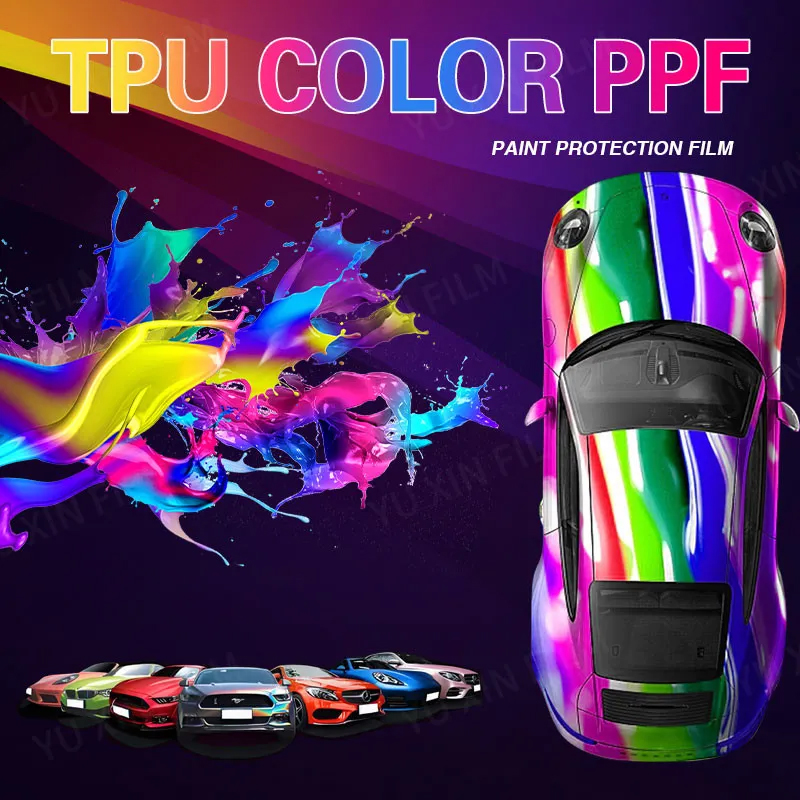
Colored PPF tends to cost more and requires a more experienced installer, but it’s the cleanest way to combine style + impact protection.
Coverage options: partial vs full wrap
Here’s the practical breakdown:
- Partial front (budget option): bumper + partial hood/fenders
✅ cheaper, ❌ visible line across hood/fenders - Full front (most popular): bumper + full hood + full fenders + mirrors
✅ best value/performance balance - Track / high-impact package: full front + rockers + rear arches + A-pillars
✅ best for daily drivers in harsh conditions - Full body wrap:
✅ maximum protection, ❌ expensive, installer quality matters even more
Installation matters more than the brand (seriously)
Two shops can install the same film and get completely different results. When choosing an installer, ask:
- How many PPF installs do you do per month?
- Do you wrap edges / do bulk installs when possible?
- What’s your policy if a panel has dust or lift lines?
- Do you use a plotter, hand-trim, or both? (Either can be great—skill matters.)
Look closely at their photos: check edges, corners, headlight contours, and bumper recesses.
How to care for PPF (so it stays beautiful)
- Avoid washing for about a week after install (your installer will specify)
- Hand wash when possible; avoid harsh automatic brushes
- Use mild soaps; avoid strong solvents
- Remove bugs and bird droppings quickly
- Consider a ceramic coating on top of PPF if you want easier washing (optional)
Bottom line: what’s the “best” PPF?
For most drivers in 2026:
- Best overall: a premium film like XPEL / STEK / SunTek installed by a top-rated specialist
- Best value: full-front coverage (instead of partial) from a reputable shop
- Best “looks-first”: prioritize clarity, edge work, and installer craftsmanship over spec sheets
Knowing your car model /year, your average driving (highway/city/track) and whether you want gloss vs matte vs color-change, I can direct you to the most appropriate covering package and the type of film that will be the most reasonable.


